
Don't go changing.....
The great lie that we all tell ourselves. One out of many.

Over a decade ago, Tony Blair gave an interview in which he moaned about civil service bureaucratic resistance to change. Every Prime Minister before and after Blair has said similar things. Every political leader throughout history has complained that when they pull levers labelled ‘power’, nothing happens.
Dominic Cummings, Boris Johnson’s Chief Adviser, Chief Architect of Brexit, eyesight-impaired and sartorially challenged, is not the first person to discover bureaucratic sludge. Unlike Blair, Cummings’ repeated attacks on ‘The Blob’ were not directed exclusively towards the civil service. Cummings hated anyone in SW1, the London postcode inhabited by MPs, political hacks, a lot of BBC-types, much of the civil service and plenty of well-off people.
According to Cummings, contentment with the way things are, with the status quo, means that you are fully paid-up members of The Blob and utterly resistant to change. Even those who talk in parliament about the need for change or write about it in well-remunerated newspaper columns only do so for the most cynical of reasons. And never mean what they say.
Institutional resistance to change is more than the sum of its parts: most of us lie to ourselves when we say “I embrace change, bring it on”. Put enough people who are delusional about change under one roof and you can understand why they might be labelled The Blob.

I once gave an after dinner talk to CEO-types who got very angry with me when I told them about their cultural resistance to change. To a man (they were all men) they accepted the existence of bureaucratic sludge in other businesses but “not in mine”.
‘Cummingism’ argues something weird happens to organisations that embed resistance to change in their culture. That culture persists, even when the people are changed (sacked and replaced). Once change infects the culture, the only cure is to change all the people and get a new building. Cultural resistance to change can infect the physical fabric, the walls, of an organisation. Sometimes the only answer is to tear it all down.
There are days when this anarchic Cummingsism philosophy looks both rational and reasonable. Try spending hours on hold with the Department for Work and Pensions only to be cut off mid conversation after being transferred multiple times - you will become an anarchist, if only for a while.
Fear
Fear lies behind that resistance to change. Fear of an unknown future. It’s all very well for the boss to ask us to change our working habits, but what if he’s wrong and the proposed changes don’t work? Or even make things worse?
A commitment to change means commitment to an uncertain future. Perhaps a commitment to radical uncertainty. For most of us, that is scary. So we choose ‘the devil we know’. We instinctively take comfort in how things have always been done.
Many of us are instinctively risk averse. Behavioural scientists have long known that we hate losses far more than we love gains. Risk taking is rare and when it does occur it can be of exactly the wrong kind. The great financial crisis happened because a lot of natural risk takers had gravitated towards the world of finance and were incentivised to take outsize risk. That’s not the kind of risk taking we have ever needed - or will need.
It’s easy to be critical about bureaucratic sludge. We all - often with good reason - moan about it sooner or later. The conclusion is always that there should be less of it. Bureaucracy is a pejorative term, often deservedly so. But not always. It’s possible, for example, that the NHS needs more administrators, an idea that lies diametrically opposed to the popular notion that all of the health systems woes are down to bureaucratic sludge. Slashing the number of administrators appeals to the non-administrator classes in the NHS - that’s a change that would be universally popular (unless you are one of the administrators so slashed). But, it could be exactly the wrong thing to do (international comparisons suggest that NHS bureaucrats are outnumbered by their global peers).
One of the many reasons why the NHS gets worse every year is that nobody is quite sure what change is needed. Change is certainly needed but the rest is wholly uncertain. So nothing much happens. It’s easier to do nothing than take a risk - one that might not pay off. Being part of the sludge means that you never get blamed. The risk taker is always exposed if things go wrong.
Perhaps the NHS needs more administrators but fewer existing ones.
That the UK’s public sector contains vast swathes of dysfunctional institutions is deeply - viscerally - felt by every single Briton. Much of the private sector is in similar shape: the drearily familiar list includes the railways, insurance companies, water utilities (any utility) and all financial institutions.
Any business or government department that begins interactions with “your call is important to us” immediately self-identifies as a consummate liar, untrustworthy and utterly indifferent to customer needs.
What they don’t teach you at business school
That British business is poorly managed is a little-known but well-established fact. Plenty of research points to a cadre of managers that perform poorly when compared to their peers around the world. The British public sector is even worse managed.
A comprehensive answer to the question ‘why has it come to this?’ would require something much more than a Substack post. But here is one reason, a sort of ‘management 101’ reason.
The word decimate has its roots in the Latin "decimare", which means “to remove one tenth”. According to legend, Roman soldiers were divided into groups of ten and forced to draw straws. The group with the shortest straw was then executed in front of the other soldiers. There are differing accounts of the motivation for all this: some say it was a random process to maintain order and obedience. Others suggest that decimation only took place after disciplinary infractions. Either way, it helped create an effective fighting force - one that knew how to adapt, if not change, when circumstances dictated.
One of the dirty secrets of American corporate life is the annual (at least) RIF. That was originally a military acronym, occasionally an almost-euphemism to describe a casualty count. It stands for ‘reduction in force’ which is slightly cuddlier than ‘dead or wounded’. RIF quickly crossed over into corporate life, where it became a euphemism for redundancies and/or layoffs and/or cost cutting (they all amount to the same thing but start from different places, often for local legal reasons).
The dirty secret is in how companies sell the RIF to their workers. It’s always a ‘one-off’ exercise prompted by ‘unusual’ circumstances. Eventually, employees work out that the RIF happens every year at exactly the same time. Everyone - including (or even especially) senior executives - comes to understand that the risk of summary execution is quite high. And behaviour changes accordingly. Notice that word: “changes”.
British businesses find it much harder, culturally and legally, to fire people. Anyone thinking of investing in a British company should always include a particular question when doing due diligence: how many people have you fired lately?
The British public sector never fires anybody. To be precise, civil servants and other government employees are only ever ‘let go’ in extremis. That, as much as any other reason, is why nothing ever changes. Why would it? Where is the incentive to embrace risky behaviour like changing?
A global generalisation
Substitute many other country names for “Britain” in the above polemic. Reluctance to change manifests itself in multiple ways. But mostly it is about risk aversion in the face of radical uncertainty. Failing to fire people is just one aspect of all this.
Take the global housing crisis. Why hasn’t it been solved? It’s mostly because everyone on the inside knows about the multiple policy proposals put forward by all sorts of interested parties, any one of which might work but, equally, might not. Anyone who has to choose a particular policy - and therefore reject all the alternatives - is invested in the success or failure of that one choice. A risky business. Civil servants know that it probably won’t work and the minister concerned will be shuffled out in due course. So what’s the point of trying?
What’s the solution? Embrace risk. Acknowledge the radical uncertainty; don’t take stupid risks; be as evidence based and as rational as you can. And realise that every single decision involves a calculated risk. Even not taking a decision.
And fire all the people invested in not changing. Anyone not interested in taking risk should be removed.
We are better than this
No policymaker can do everything all at once. Probably not everything. But start somewhere:
See off the scourge of every developed economy. See off every populist who says that each and every one of our problems is caused by immigrants. They are not. Often, quite the opposite. So that means curing the problems so that immigrants can no longer be blamed. It means explaining trade-offs: every policy involves at least one. Want to build more houses? In countries like the UK and Ireland that means importing workers.
Embrace immigration while managing it. The economy needs immigrants. That’s a constant - it’s just the quantity that varies. Common humanity and international treaty obligations mean that we should permit refuge to those that genuinely need it. But every country has to acknowledge that it cannot do this without limit. This can either be managed (with an international dimension) or allowed to descend further into chaos and the arms of the populists.
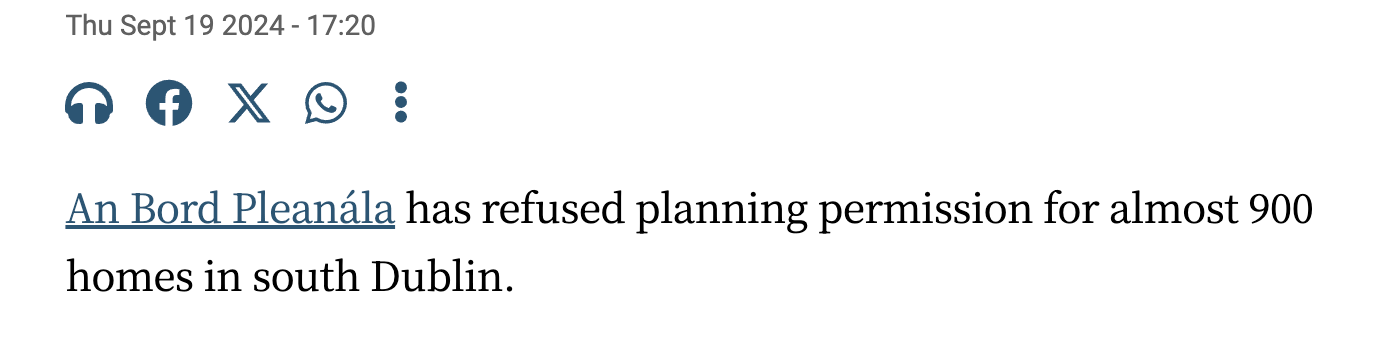
Build stuff. The system has evolved such that planners say no, finance ministers say there is no money, local politicians say build somewhere else, and (some) economists say building things causes inflation.
Take some calculated risks. Face up to trade-offs; stop pretending they don’t exist. Get rid of the sludge. Embrace change.
The inertia that has been the government’s modus operandi must be in its very late teens by now … we need strong leadership with a focus of enforcing accountability!
Imagine if getting elected depended on promises kept and actions delivered - real KPIs reached - & following the published RACI!!
We’d have action and consequences (but good ones!)
Many thanks Declan.
We recently did an experimental Book Review podcast - the only one we have ever done. We reviewed 'Hillbilly Elegy" by J D Vance. We are going to do more, sticking with the experiment.
We are trying to figure out how much interest there is in book reviews, so your comments are welcome. As it happens we received precisely zero feedback after that review podcast so we don't really know what people think (it did get good download/listen numbers).
Your suggestions all look great - I have just started the Dan Davies book and am thoroughly enjoying it.
Thanks again